When I first tried making potato fritters without deep frying, I was surprised by how crisp and golden they could get in just a skillet. It’s a kind of magic watching the edges turn crunchy while the insides stay tender, all with minimal oil. This method keeps things simple but doesn’t skimp on flavor or texture.
There’s something satisfying about shaping the potato mixture into little patties, hearing that initial sizzle, and knowing I can get that perfect crunch without any fuss. It’s a humble dish, but when done right, it feels like a small victory—crispy on the outside, warm potato inside, with just enough salt and seasoning to elevate it.
Focusing on achieving the perfect crispy crust without deep frying, using a simple pan-frying method that highlights the potato’s natural flavor and texture.
Crispy Pan-Fried Potato Joys
- Learning to get the perfect crust took a few tries, but now I love how the edges turn gorgeously crispy.
- The first time I made these for friends, their eyes lit up at that warm, savory smell filling the kitchen.
- I find comfort in shaping these fritters late at night, the simple act helping me unwind after a hectic day.
- Getting the seasoning just right always feels like a small victory—too bland, and it’s forgettable; too salty, and it’s overbearing.
- There’s a nostalgic rush when I bite into a freshly cooked fritter—crunchy outside, tender potato inside, that’s still my favorite.
The story behind this recipe
- Making these potato fritters reminds me of lazy Sunday mornings at my grandmother’s house, where she’d peel a mountain of potatoes while humming old tunes. That smell of earthy potatoes sizzling in butter is etched in my memory, a quiet comfort I chase every time I make these.
- One summer, I tried adding a dash of smoked paprika just to see if I could boost that smoky aroma. Turns out, a little goes a long way—and now I always keep a jar nearby for that extra kick.
- There’s a messy joy in squeezing out the excess moisture from the potatoes—you feel like a real cook, turning simple ingredients into something golden and crispy. It’s a small act that makes all the difference in texture and flavor.
Fascinating Potato Fritter Origins
- Potato fritters have roots in many cultures, from Eastern Europe to Asia, each adding their own twist to this humble dish.
- Historically, fritters were a way to stretch ingredients, turning leftover potatoes into a satisfying snack or meal.
- The technique of pan-frying potatoes dates back centuries, with variations appearing in recipes from the 18th century.
- In some regions, adding herbs or spices to the batter transformed simple fritters into festive street food staples.
- Over time, fritters became a comfort food, with each family developing their own secret seasoning or dipping sauce.
Key Ingredients Breakdown
- Russet potatoes: I love how their starchy richness makes for a fluffy interior. If you want more hold, try Yukon Gold instead, which yields a slightly creamier texture.
- Onion: Adds a sweet, sharp contrast that wakes up the fritters. Dicing fine ensures it disperses evenly; skip it if you prefer a milder bite.
- Flour: I use all-purpose for that classic crispy crust. For gluten-free, try rice flour or cornstarch—just expect a slightly lighter crunch.
- Egg: Binds everything together and helps crisp up. If you’re vegan, a flaxseed or chia seed slurry works; it won’t crisp quite the same, but it still holds.
- Oil for frying: I opt for vegetable or neutral oil; their high smoke points keep the fritters golden and crackling. For a nuttier flavor, try sesame or peanut oil—use sparingly.
- Salt & seasonings: I keep it simple with sea salt and pepper, but adding garlic powder or fresh herbs can brighten the flavors. Adjust to taste before frying.
- Optional herbs or spices: Chopped parsley, cumin, or paprika can add a fresh or smoky layer. Use sparingly—these are extras, not the main show.
Spotlight on Key Ingredients
Russet potatoes:
- I love how their starchy richness makes for a fluffy interior. If you want more hold, try Yukon Gold instead, which yields a slightly creamier texture.
- Onion: Adds a sweet, sharp contrast that wakes up the fritters. Dicing fine ensures it disperses evenly; skip it if you prefer a milder bite.
Egg & oil:
- Egg: Binds everything together and helps crisp up. If you’re vegan, a flaxseed or chia seed slurry works; it won’t crisp quite the same, but it still holds.
- Oil for frying: I opt for vegetable or neutral oil; their high smoke points keep the fritters golden and crackling. For a nuttier flavor, try sesame or peanut oil—use sparingly.
Ingredient Swap Tips
- Dairy-Free: Swap milk or cream for coconut milk or almond milk; keeps the batter moist but adds a subtle nutty note.
- Gluten-Free: Use rice flour or cornstarch instead of all-purpose flour; results in a lighter, crispier crust.
- Vegan: Replace egg with a flaxseed or chia seed slurry (1 tbsp seeds + 3 tbsp water); it helps bind without losing crunch.
- Low-Sodium: Opt for a salt substitute or season with fresh herbs and spices instead; keeps flavor vibrant without added salt.
- Onion Substitute: Use finely chopped scallions or chives for a milder, fresher onion flavor with a hint of green.
- Oil Choices: For a nuttier aroma, try sesame or peanut oil; use sparingly as their flavors are stronger.
- Potato Type: Yukon Golds deliver creaminess, but if you prefer fluffier, starchy potatoes, Russets are your go-to.
Equipment & Tools
- Large mixing bowl: For mixing and combining ingredients.
- Grater: To shred potatoes and onion evenly.
- Clean dish towel: To squeeze out excess moisture from potatoes.
- Non-stick skillet: For even frying and crisping.
- Spatula: To flip and remove fritters safely.
Step-by-step guide to potato fritters
- Gather your equipment: a large mixing bowl, a grater, a clean dish towel, a non-stick skillet, and a spatula. The bowl is for mixing, the grater for shredding potatoes, towel to squeeze out moisture, skillet for frying, spatula for flipping.
- Peel 3-4 medium russet potatoes. Grate them coarsely into the bowl. Avoid over-mashing; you want texture, not puree.
- Finely chop 1 small onion and add to the potatoes. Mix well to distribute the flavor.
- Sprinkle 3 tablespoons of all-purpose flour over the mixture. Season with 1 teaspoon salt and half teaspoon pepper. Mix thoroughly until combined. The mixture should hold together when pressed.
- In the skillet, heat 2-3 tablespoons of vegetable oil over medium heat (~160°C / 320°F). To check, flick a tiny bit of water – it should shimmer and crackle immediately.
- Scoop about 2 tablespoons of mixture per fritter. Shape into small patties using your hands or a spoon. Carefully place them in the hot oil, pressing slightly to flatten.
- Cook for about 3-4 minutes per side, until golden brown and crispy. Flip carefully with the spatula. You should hear a steady crackle and see a beautiful amber color.
- Check for doneness: the fritters should be firm, golden, and crackling. If they’re soggy or pale, turn down the heat and cook a bit longer.
- Remove the fritters with a slotted spatula, drain briefly on paper towels. Rest for 1-2 minutes to allow the crust to set.
- Serve warm, ideally with a dollop of sour cream or a squeeze of lemon for brightness. Enjoy that crispy, tender bite.
Let the fritters rest for a minute after frying to set the crust. Serve immediately while crispy, or keep warm on a rack in a low oven (about 90°C / 200°F). Garnish with herbs or sauce as you like.
How to Know It’s Done
- Fritters are golden and crispy on the outside, with a firm, cooked interior.
- Crackling sound during frying indicates proper temperature and crispness.
- Fritters hold together when flipped without falling apart or sticking excessively.
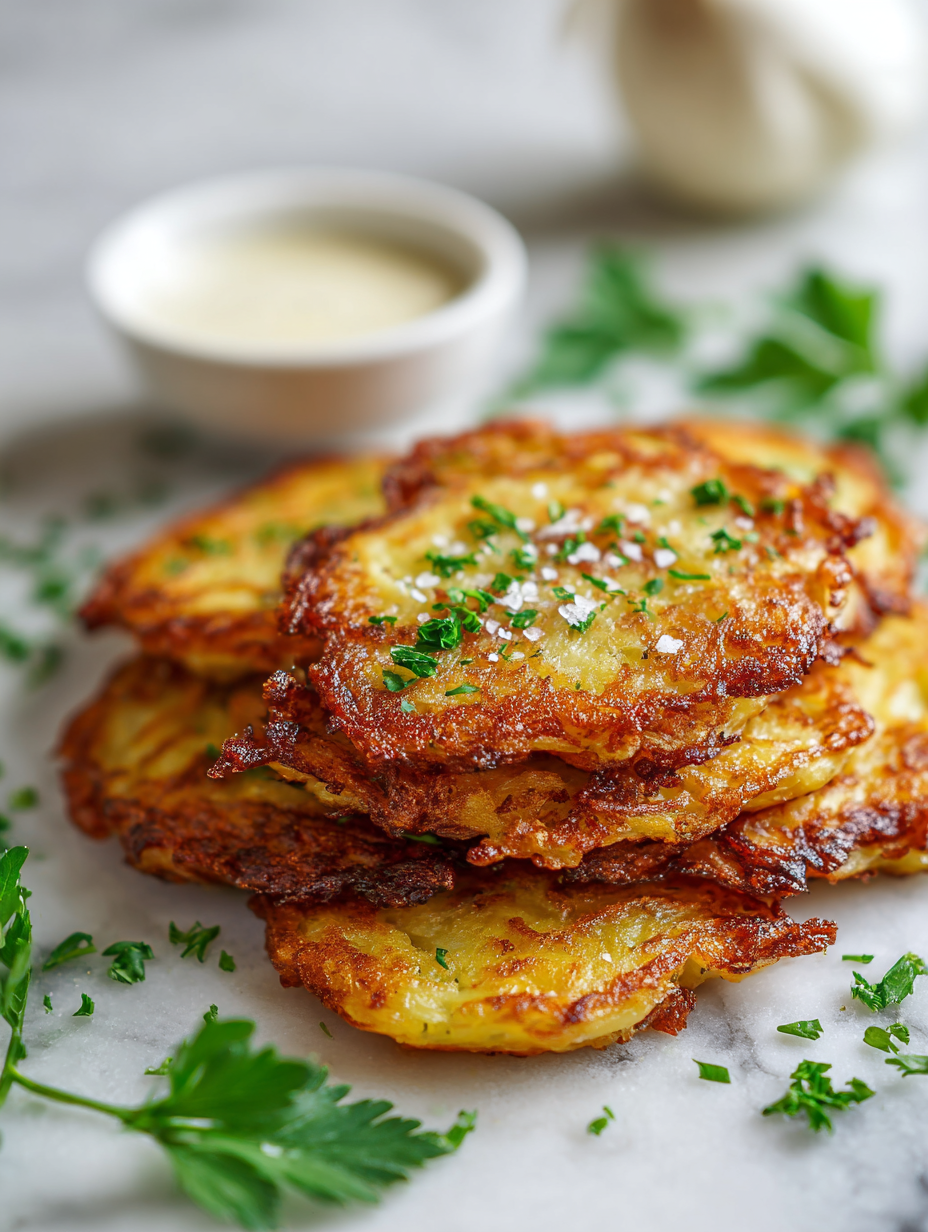
Crispy Pan-Fried Potato Fritters
Ingredients
Equipment
Method
- Peel the potatoes and grate them coarsely into a large mixing bowl. This releases the starch and creates a fluffy interior.
- Finely chop the onion and add it to the grated potatoes, mixing well to distribute the flavor and texture evenly.
- Using a clean dish towel, squeeze out as much excess moisture from the grated potatoes as you can. This step is key to achieving that crispy crust.
- Add the all-purpose flour, beaten egg, salt, and pepper to the potato mixture. Mix thoroughly until everything is well combined and the mixture holds together when pressed.
- Heat 2-3 tablespoons of vegetable oil in a non-stick skillet over medium heat until shimmering and just starting to crackle, indicating the right temperature.
- Scoop about 2 tablespoons of the mixture and shape it into a small patty with your hands or a spoon. Carefully place it into the hot oil, pressing slightly to flatten.
- Cook each fritter for about 3-4 minutes on one side, until golden brown and crispy, then flip gently with a spatula and cook the other side until equally golden and crispy.
- Once both sides are golden and crisp, remove the fritters from the skillet and drain briefly on paper towels. Repeat with the remaining mixture, adjusting heat as needed to prevent burning.
- Let the fritters rest for a minute to firm up, then serve warm with your favorite dips or a squeeze of lemon for extra brightness.
Pro Tips for Crispy Fritters
- Bolded mini-head: Use a hot pan → Ensure the oil shimmers before adding the fritters for a crisp crust.
- Bolded mini-head: Squeeze out moisture → Excess water makes fritters soggy, so thoroughly wring the grated potatoes.
- Bolded mini-head: Don’t overcrowd the pan → Cook in batches to keep temperature steady and avoid soggy edges.
- Bolded mini-head: Flip carefully → Wait until the edges are golden and easily lift before flipping to prevent breaking.
- Bolded mini-head: Adjust heat as needed → Medium heat (~160°C/320°F) is ideal; too hot burns outside, raw inside.
- Bolded mini-head: Rest briefly after frying → Let fritters sit for a minute to firm up for maximum crunch.
- Bolded mini-head: Use a wide spatula → Helps lift the fritters gently, keeping that perfect crispy shape intact.
Common mistakes and how to fix them
- TOO MUCH MOISTURE: Dampen potato mixture can cause soggy fritters. Squeeze excess water thoroughly.
- DUMPED OIL: Overfilling the pan leads to splatters. Use just enough to cover the bottom lightly.
- OVER-TORCHED FRITTERS: Burning the edges ruins texture. Keep heat medium, watch closely, and flip timely.
- UNDERRIPE POTATOES: Use fresh, firm potatoes for crispiness. Avoid soft or sprouted ones.
Quick Fixes & Pantry Hacks
- When oil shimmers, add fritters for crisp edges and quick cooking.
- Splash a tiny amount of water if fritters stick; they’ll crackle and release easily.
- Patch soggy fritters by re-crisping in a hot skillet for 1-2 minutes.
- Shield burnt edges with a paper towel and lower heat immediately for even cooking.
- When in doubt, swap potato types: use Yukon Gold for creaminess, Russets for fluff.
Prep, store, and reheat tips
- Peel and grate potatoes ahead of time, then store in water in the fridge for up to 24 hours to prevent browning and preserve freshness. Drain and squeeze out excess moisture just before mixing.
- You can prepare the seasoned potato mixture up to a day in advance; keep it covered in the fridge. The flavors meld slightly, making the fritters even more flavorful.
- Cooked fritters are best enjoyed fresh, but you can store leftovers in an airtight container in the fridge for up to 2 days. Reheat in a hot skillet until crispy, about 2-3 minutes per side, until they shimmer with warmth and regain their crunch.
- For longer storage, freeze uncooked or cooked fritters. When freezing, lay them flat on a tray until solid, then transfer to a zip-top bag. To reheat, bake at 180°C / 350°F for 10-12 minutes, until crispy and hot, with a pleasant crackle when you bite into them.
Frequently Asked Questions
1. How should I prepare the potatoes?
Use a sharp grater to get even, coarse shreds. It helps the fritters hold together better during frying.
2. How do I remove excess moisture?
Squeeze out as much moisture as possible with a clean dish towel. Wet potatoes make soggy fritters that won’t crisp.
3. What temperature should the oil be?
Keep the oil at medium heat (~160°C / 320°F). Too hot, and the outside burns before the inside cooks.
4. How many fritters can I cook at once?
Fry in small batches—about 4-5 at a time—to maintain consistent heat and ensure crispiness.
5. How do I know when they are done?
Look for a golden-brown color and a crackling sound. The edges should be crispy and firm to the touch.
6. Can I bake instead of fry?
Yes, you can bake them at 180°C (350°F) for about 15 minutes. Expect slightly less crispness, but still tasty.
7. What if they stick to the pan?
If they stick, lift gently with a wide spatula and avoid overcrowding the pan. This helps prevent tearing and sticking.
8. How should I store leftover fritters?
Store leftovers in an airtight container in the fridge for up to 2 days. Reheat in a hot skillet until crispy.
9. How can I make these vegan?
To make vegan, replace the egg with a flaxseed slurry or mashed banana. The texture will be slightly different but still good.
10. What type of potatoes work best?
Use fresh potatoes for best texture. Old or sprouted potatoes can be mushy and affect the crispness.
These potato fritters might seem simple, but they carry a quiet satisfaction that sticks with you long after the last bite. Crisp edges, tender insides, and that savory aroma make them a go-to for any lazy weekend or quick snack. Sometimes, it’s the humble dishes like this that remind us how good straightforward comfort food can be.
In a world full of fancy gadgets and complicated recipes, coming back to something so straightforward feels like a small act of rebellion. They’re a reminder that good food doesn’t need to be complicated—just honest ingredients and a bit of patience. And honestly, that’s enough to keep me coming back for more.